Why Changes in Your Vision Should Not Be Ignored

Is Your Vision Slowly Becoming Cloudy or Blurry?
Vision changes can be easy to brush off, especially when they happen gradually. You may find yourself needing brighter light to read, struggling with glare while driving at night, or feeling as though your glasses are never quite clean enough.
These small changes may not seem urgent at first, but they can sometimes be signs of cataracts.
Cataracts are one of the most common causes of vision problems, particularly as we get older. They develop when the natural lens inside the eye becomes cloudy, making vision appear blurred, misty or less sharp.
The good news is that cataracts are treatable. With the right assessment, you can understand what is causing your symptoms, whether treatment is needed, and what options may be suitable for your vision and lifestyle.
Quick answer:
Cataracts can cause cloudy, blurry or misty vision, glare, difficulty reading and problems driving at night. They often develop gradually and may not need treatment straight away, but if symptoms are affecting daily life, an eye specialist can assess whether cataract surgery may be suitable.
What Are Cataracts?
A cataract forms when the clear lens inside your eye becomes cloudy. This cloudiness can stop light from passing through the eye properly, causing vision to become blurred, dull or hazy.
Cataracts usually develop slowly over time. They are most commonly linked with ageing, but they can also be associated with other factors such as diabetes, eye injury, long term steroid use, smoking, or previous eye surgery.
Not every cataract needs treatment straight away. In the early stages, changes to glasses or stronger lighting may help. But if cataracts begin to affect your daily activities, an eye specialist may recommend cataract surgery.

Common Symptoms of Cataracts
Cataracts can affect people differently, but common signs include:
- Blurred, cloudy or misty vision
- Colours looking faded or less bright
- Difficulty seeing clearly at night
- Sensitivity to bright lights or glare
- Seeing halos around lights
- Trouble reading small print
- Frequent changes to glasses prescription
- Difficulty driving, especially at night
- Feeling like your glasses are always dirty even after cleaning them
Because symptoms can develop gradually, many people do not realise how much their vision has changed until it starts affecting their independence or quality of life.
When Should You See an Eye Specialist?
You should consider booking an eye assessment if your vision is affecting your normal routine.
This may include difficulty reading, watching TV, using a phone or computer, driving, working, walking confidently, or enjoying hobbies. You should also seek advice if you notice a sudden change in vision, new eye pain, flashes, floaters, or loss of sight, as these symptoms may be linked to other eye conditions that need urgent attention.
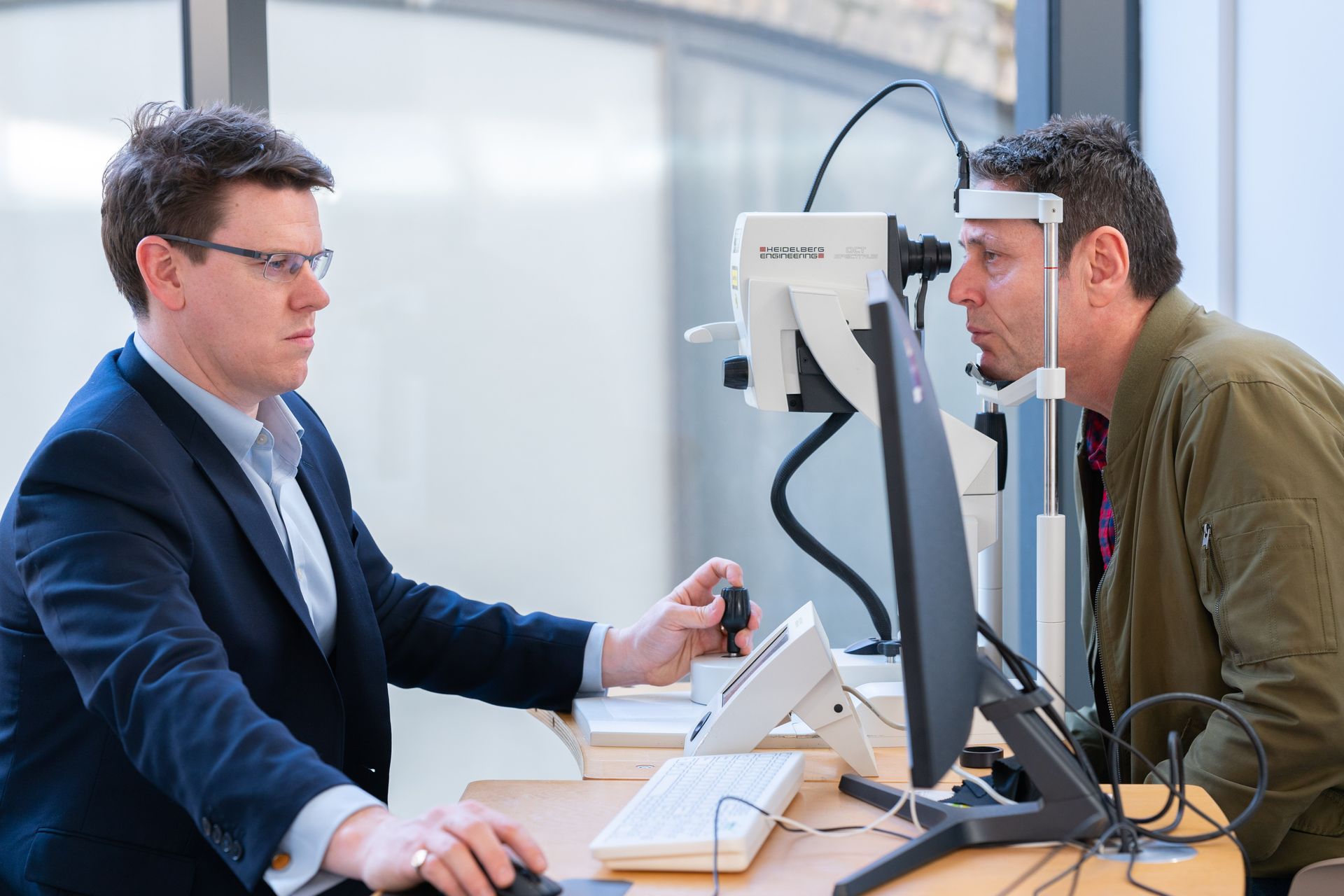
During an eye consultation, your specialist can examine your eyes, confirm whether cataracts are present, assess how advanced they are, and discuss whether treatment is needed.
How Are Cataracts Treated?
Cataracts cannot be removed with eye drops, medication or lifestyle changes. When cataracts significantly affect vision, cataract surgery is the only effective treatment.
Cataract surgery involves removing the cloudy natural lens and replacing it with a clear artificial lens, known as an intraocular lens. This helps light focus properly again and can improve vision.
The decision to have surgery is usually based on how much the cataract is affecting your life, your eye health, your visual needs, and your consultant’s clinical advice.
What Happens During a Cataract Consultation?
A cataract consultation is designed to give you a clear understanding of your eye health and your treatment options.
Your appointment may include:
- A discussion about your symptoms and medical history
- Vision tests
- Eye pressure checks
- A detailed examination of the lens and retina
- Measurements to help select the most suitable lens implant
- A discussion about surgery, benefits, risks and recovery
- A discussion about the intraocular lenses available and which might be best for your lifestyle
This is also your opportunity to ask questions about the procedure, recovery time, lens choices, and what results may be realistic for you.
Why Early Cataract Assessment Matters?
Cataracts are common, but that does not mean they should be ignored.
Many people delay seeking help because they think reduced vision is simply part of getting older. While cataracts are age related in many cases, vision loss can have a real impact on independence, confidence, mobility and safety.
An eye assessment can help confirm whether cataracts are affecting your vision and whether treatment may be needed. It also gives you the opportunity to understand your options clearly, ask questions and make the right decision at the right time.
Early assessment does not always mean immediate surgery. It simply gives you the information you need to move forward with confidence.
Why Choose The REAL Clinic for Cataract Care?
At The REAL Clinic in Battersea, London, our ophthalmology team provides specialist-led assessment and treatment for patients experiencing cataract symptoms.
We offer a patient-focused approach, helping you understand your diagnosis, treatment options, lens choices and recovery pathway. From your first consultation to aftercare, our team is here to support you with clear information and personalised care.
Whether your symptoms are mild or your vision is already affecting daily life, an eye assessment can help you take the next step with confidence.
Frequently Asked Questions About Cataracts
List of Services
-
Are cataracts painful?List Item 1
Cataracts usually develop without pain. The main symptom is a gradual change in vision, such as cloudiness, glare or blurred sight.
-
Can cataracts affect both eyes?List Item 2
Yes, cataracts can affect one or both eyes. They may develop at different speeds, so one eye may feel worse than the other.
-
Do cataracts always need surgery?List Item 3
No. Early cataracts may not need treatment straight away. Surgery is usually considered when cataracts start affecting daily activities or quality of life.
-
Can glasses fix cataracts?List Item 4
Glasses may help in the early stages, but they cannot remove cataracts. If the cataract becomes more advanced, surgery may be needed to improve vision.
-
Is cataract surgery permanent?
During cataract surgery, the cloudy lens is removed and replaced with an artificial lens. The cataract itself does not grow back, although some patients may later develop cloudiness behind the lens implant, which can usually be treated.
Take the First Step Towards Clearer Vision
If your vision has become cloudy, blurry or affected by glare, now is a good time to prioritise your eye health.
Book a consultation with our ophthalmology team and find out whether cataracts could be affecting your vision.
Call The REAL Clinic today to arrange your cataract consultation.
Disclaimer:
This blog is for general information only and does not replace medical advice. If you are experiencing changes in your vision, please speak to a qualified eye care professional.
Sign up to our newsletter to receive clinic updates, treatment insights, expert advice, and the latest news from our team.
Stay Connected with us